Saving Everything, Knowing Nothing: The Hidden Cost of Obsessive Capture
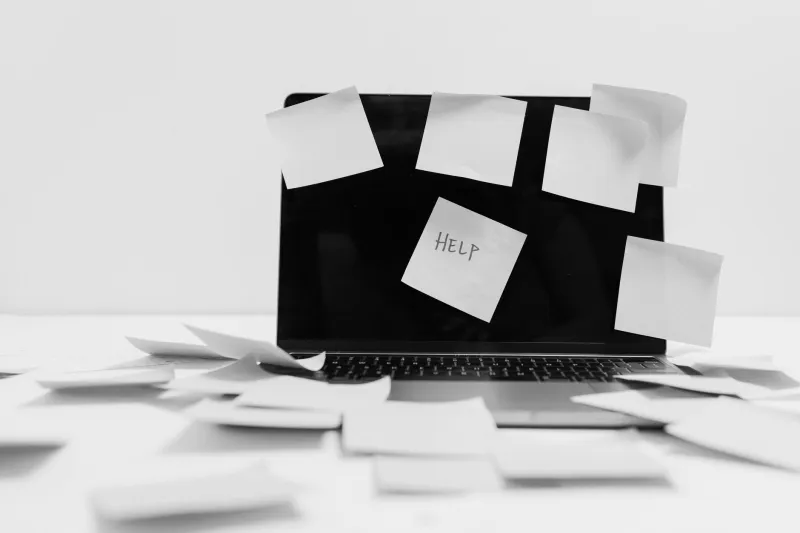
There's a particular kind of anxiety that lives inside every productivity-obsessed knowledge worker's brain. It sounds like this: What if I forget this?
So you screenshot it. You clip it. You dictate a voice memo while merging onto the highway. You forward it to your Notion inbox, your Readwise queue, your "read later" folder that now has 847 items in it. You have captured the thing. You have not lost the thing.
And yet — somehow — you've lost the thing.
This is the capture paradox, and if you've spent any real time in the productivity space, you've probably bumped into it without having a clean name for it. The more aggressively you record, the less you actually know. Your second brain starts to feel less like an extension of your mind and more like a warehouse nobody ever visits.
Why Your Brain Isn't a Hard Drive (And Never Was)
Here's the uncomfortable neuroscience: memory isn't a recording system. It's a reconstruction system. Every time you recall something, your brain is actively rebuilding it from fragments — and that rebuilding process is exactly what makes knowledge sticky.
The act of not immediately offloading a thought — sitting with it, wrestling with it, connecting it to something you already know — is neurologically doing real work. Psychologists call this elaborative encoding. You're basically forcing your brain to file information in multiple places at once, cross-referencing it against existing knowledge structures. That's how ideas stop being trivia and start being tools.
When you outsource that friction to an app the moment a thought appears, you skip the filing process entirely. The idea lands in your capture system, not in your head. And since your capture system doesn't think, the idea just sits there, inert.
Researchers have documented a related phenomenon called the "Google effect" — the tendency for people to remember where they stored information rather than the information itself. We're increasingly a species that knows how to find things rather than a species that knows things. For casual trivia, that's probably fine. For the kind of deep, connective insight that makes knowledge workers valuable? It's a slow leak.
The Productivity Industrial Complex Sold You a Lie
Let's be honest about how we got here. The note-taking tool market — and we say this as people who genuinely love good tools — has a financial incentive to make you feel like capture is the point. More clips, more integrations, more automated transcripts. The pitch is always frictionless ingestion.
But frictionless ingestion is exactly the problem.
Friction in the right places isn't a bug. It's a feature. When you have to choose whether something is worth writing down, you're already doing cognitive work on it. You're evaluating relevance, assigning priority, making a judgment call. That judgment call is the beginning of understanding.
A reporter who takes sparse, deliberate notes in an interview often walks away with a sharper grasp of the story than the one who recorded everything and transcribed it later. The constraint forced active listening. The abundance enabled passive presence.
Knowledge work is the same deal.
What Selective Capture Actually Looks Like
This isn't a case for going full analog or throwing your capture tools in the trash. It's a case for developing what might be the most underrated skill in the modern knowledge worker's toolkit: knowing what not to record.
Here's a simple framework worth trying:
The 48-Hour Test. Before you capture something, ask: will this matter to me in 48 hours? Not "could this be useful someday" — that question has a yes answer for almost everything, which is how you end up with 847 items in your read-later folder. Will it matter specifically, concretely in 48 hours? If the answer is no, let it go.
Capture conclusions, not content. Instead of clipping an entire article, write one sentence about what it changed in how you think. Instead of saving a voice memo, pause and ask what the one thing worth remembering actually is. This forces synthesis in the moment — which is where the real learning happens.
Create capture budgets. Give yourself a finite number of captures per day. Ten is a reasonable ceiling for most people. When you hit the limit, you have to make trade-off decisions. Trade-off decisions are thinking. Thinking is the whole point.
Separate capture from processing. If you do use a capture-everything approach as a first pass, build in a daily triage session where you delete at least 60% of what you saved. The deletion is the work. It forces a second evaluation, and things that survive two evaluations are things you actually care about.
The Signal-to-Noise Problem Is a You Problem
Here's something the tool vendors won't tell you: your note system's signal-to-noise ratio is almost entirely determined by your capture discipline, not your organizational scheme. You can have the most beautifully tagged, perfectly linked second brain in existence, and if it's full of half-relevant content you saved on autopilot, it's still useless.
The people who seem to have genuinely powerful knowledge systems — the ones who can surface the right insight at the right moment, who make unexpected connections, who seem to have read everything and retained it — aren't necessarily using better tools. They're making harder choices about what earns a place in their system in the first place.
Constraint is the actual product. The tool is just where you store the output of good judgment.
Building a Practice Around Knowing Less
Reframing capture as a skill of exclusion rather than inclusion feels counterintuitive at first. We're culturally wired, especially in the US productivity space, to optimize for more — more inputs, more throughput, more output. The idea that doing less of something makes you smarter at it doesn't fit the hustle narrative.
But think about how you'd describe someone with genuine expertise in a field. You'd say they have depth, not volume. Depth comes from ideas that have been turned over, questioned, connected, and tested — not ideas that have been filed and forgotten.
Your notes should be a reflection of your thinking, not a backup drive for your attention span. The best note-taking system isn't the one that captures the most — it's the one that helps you understand the most.
And sometimes, the most useful thing you can do with a thought is let it go, trust that the important parts will stick, and save your capture budget for the things that genuinely deserve to live in your system.
The goal was never a full notebook. The goal was a sharper mind.